

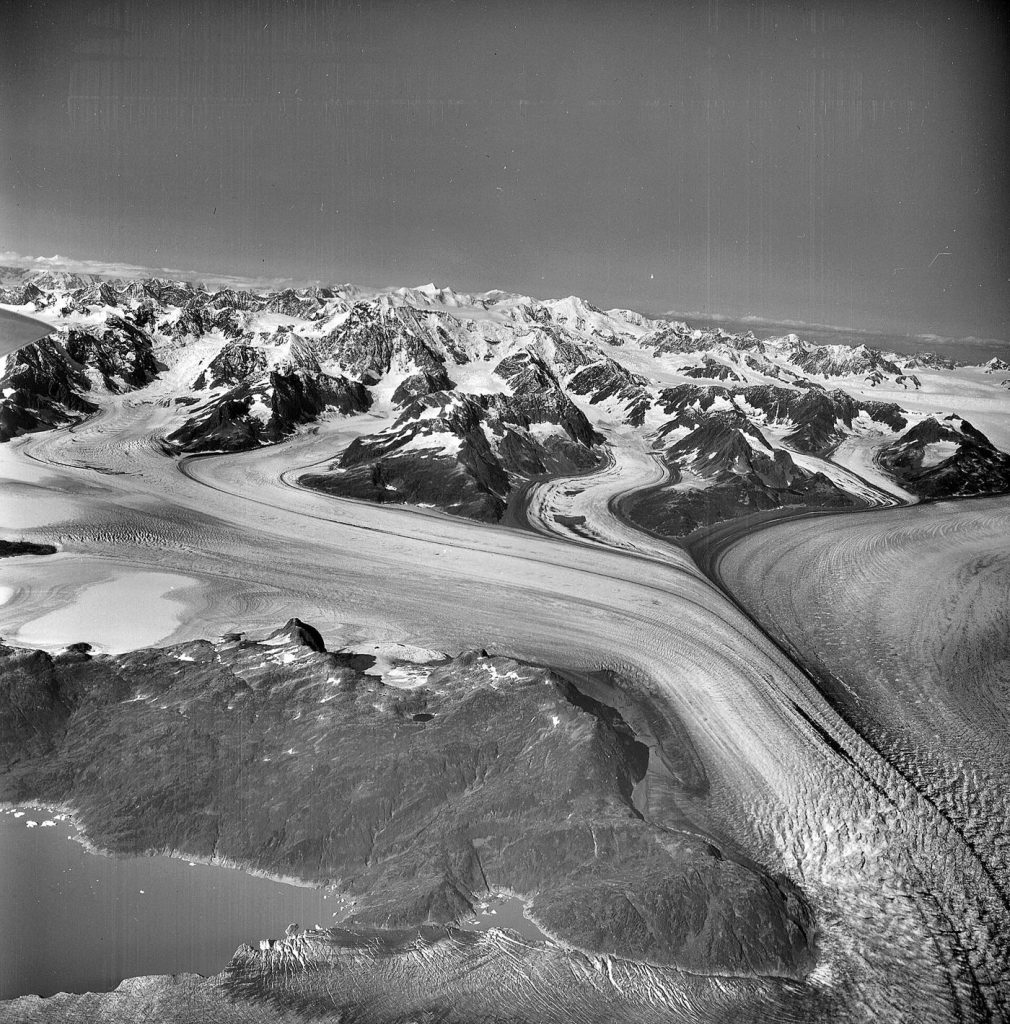
Every major glaciated region on Earth lost ice in 2025, for the fourth year in a row. According to the World Meteorological Organization’s State of Global Water Resources 2025 report, glaciers around the world lost 408 billion tonnes of mass between October 2024 and September 2025, enough to raise global sea level by about 1.1 millimetres in a single year. Six of the seven largest annual glacier losses on record have now occurred in the last seven years. The year before was worse still: in 2024, glaciers lost 450 billion tonnes, with all 19 of the world’s glacier regions recording a net loss, and 2023 remains the worst year since monitoring began in 1975. Mountain glaciers have lost about 6.2 percent of their ice mass since 2000, and in some regions the decline over recent decades reaches 40 percent.
What the Evidence Shows
The consequences reach far beyond the mountains. Glaciers act as frozen reservoirs, releasing meltwater in dry seasons to rivers that supply drinking water, farming and hydropower for around two billion people, and their loss threatens water security across Asia, South America and Europe. In the short term, melting glaciers also raise the risk of sudden floods from lakes that form behind unstable walls of ice and rock. The United Nations named 2025 the International Year of Glaciers’ Preservation, and the first World Day for Glaciers was marked in March 2025, but the science is blunt: the ice already lost cannot be regained in our lifetimes, and the pace of future loss depends on how quickly emissions fall. Adaptation, from better water storage to early warning systems for glacial floods, is now as urgent as cutting emissions. Reporting and analysis from sources such as National Science Foundation track the same developments, and specialists following glacier ice loss say the direction is now consistent across independent lines of evidence.
The Wider Context
The wider context is a research landscape in which replication and open data now decide reputations. Findings connected to glacier ice loss are being checked by independent groups with shared datasets, and the teams involved publish their methods in full so rivals can test every step. That discipline is slower than a headline cycle, but it is why results in this area increasingly survive first contact with scrutiny.
What Happens Next
What happens next in the story of glacier ice loss will be decided by follow-up work already under way: larger samples, longer observation and instruments that have not yet come online. The researchers involved are unusually united on one point, that the current results justify the next investment of time and money. Readers will not have to wait long for the first tests of that claim. You can follow related developments in our coverage of science.
There is a practical lesson in all of this for readers deciding what to do today. Start with the verified facts, be wary of anyone promising certainty, and prefer reversible steps while the evidence is still developing. Circumstances differ by country, income and personal situation, so general guidance should always be weighed against your own context before you act on it in any significant or lasting way.