

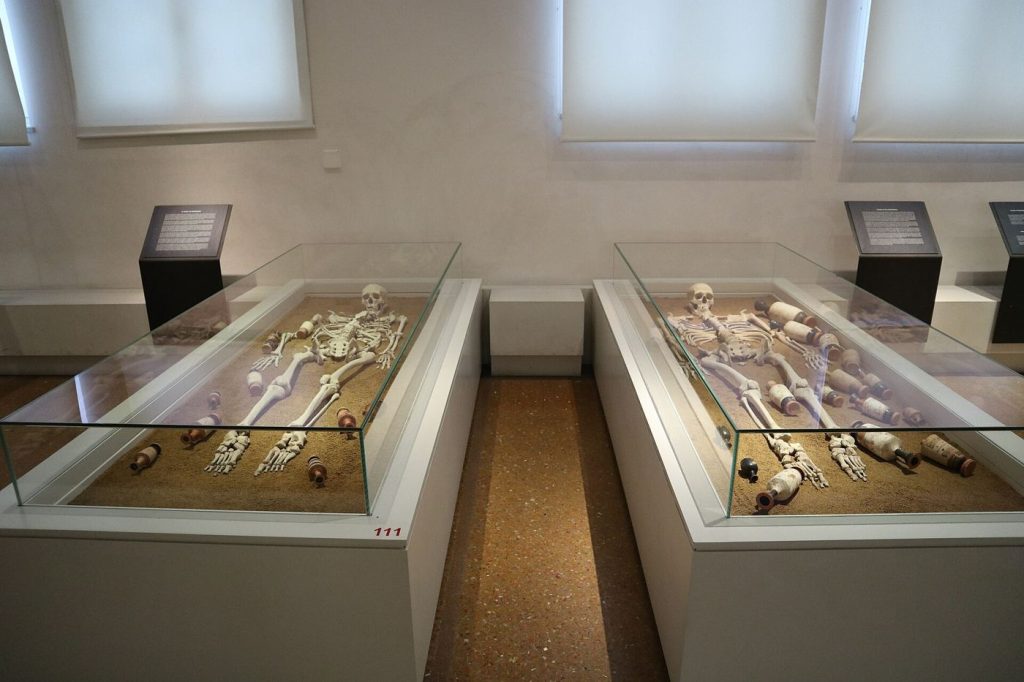
A study published in Nature has sequenced 712 ancient genomes and found a population movement that, if it carried the language, would put the arrival of Germanic languages in Scandinavia some 800 years later than tradition assumes. The work is one of the largest ancient DNA studies yet, tracing how people moved across northern Europe thousands of years ago. Languages leave no fossils, so historians have long relied on artefacts, place names and written records to guess when and how they spread. Ancient DNA offers a new kind of evidence: by tracking the movement of people themselves, researchers can test whether a language likely travelled with a migration or spread between settled neighbours.
What the Evidence Shows
The finding does not settle the question on its own, because people and languages do not always move together; a small group can impose a language, or a language can spread through trade and contact without large-scale migration. That is why the authors frame their conclusion carefully, as a possibility that depends on the link between the migrating population and the language. Still, the scale of the dataset makes the result hard to ignore, and it joins a growing body of ancient DNA work that is rewriting European prehistory. The study shows how genetics is becoming a core tool for historians, giving them evidence about the deep past that written sources simply cannot provide. Future studies with even more ancient genomes could sharpen the picture further, revealing the timing and routes of migrations in greater detail, and each new dataset gives historians another way to test ideas about how languages, cultures and peoples spread across a continent long before written records began. Reporting and analysis from sources such as National Science Foundation track the same developments, and specialists following the ancient DNA study of Germanic languages say the direction is now consistent across independent lines of evidence.
The Wider Context
The wider context is a research landscape in which replication and open data now decide reputations. Findings connected to the ancient DNA study of Germanic languages are being checked by independent groups with shared datasets, and the teams involved publish their methods in full so rivals can test every step. That discipline is slower than a headline cycle, but it is why results in this area increasingly survive first contact with scrutiny.
What Happens Next
What happens next in the story of the ancient DNA study of Germanic languages will be decided by follow-up work already under way: larger samples, longer observation and instruments that have not yet come online. The researchers involved are unusually united on one point, that the current results justify the next investment of time and money. Readers will not have to wait long for the first tests of that claim. You can follow related developments in our coverage of science.
There is a practical lesson in all of this for readers deciding what to do today. Start with the verified facts, be wary of anyone promising certainty, and prefer reversible steps while the evidence is still developing. Circumstances differ by country, income and personal situation, so general guidance should always be weighed against your own context before you act on it in any significant or lasting way.