

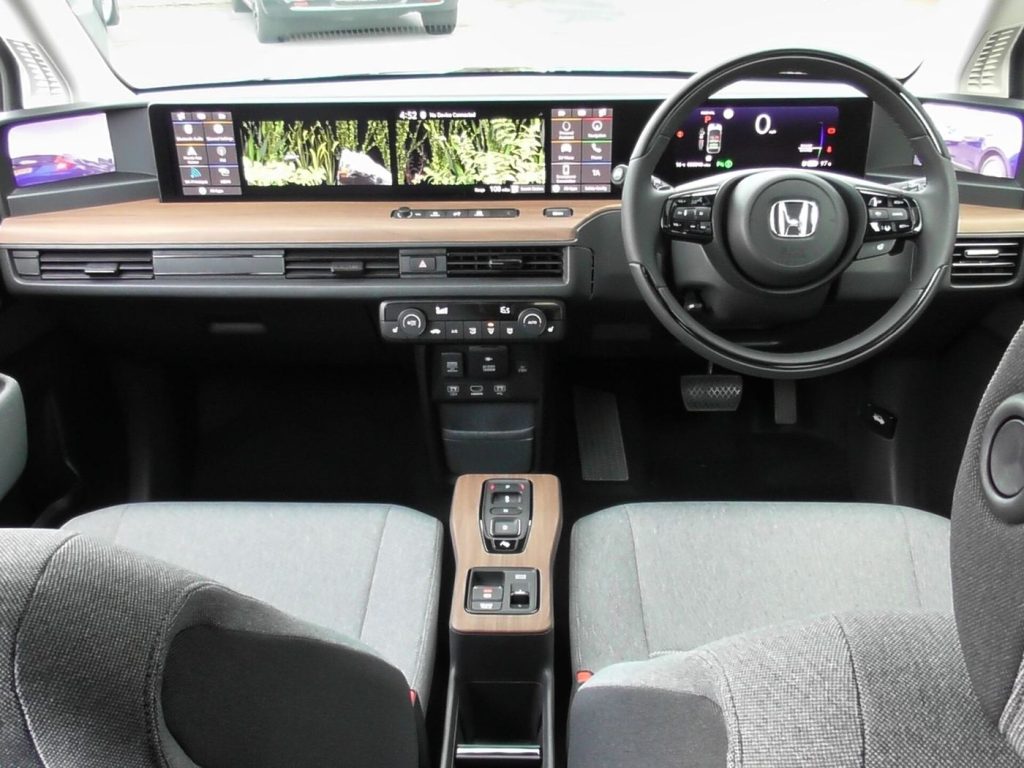
The pendulum inside car interiors is swinging back. After a decade in which manufacturers moved every control onto touchscreens, major brands are restoring physical buttons and dials for the functions drivers use most: volume, temperature, demisting and hazard lights. The reversal follows consistent feedback from owners, who found that tapping through menus for basic adjustments is frustrating at a standstill and distracting on the move, and from safety assessors, who have begun rewarding designs that let drivers keep their eyes on the road. Physical controls offer something a flat screen cannot: location by touch. A driver can find a familiar dial by feel, judge its setting from its position and adjust it in a second without a glance. Screens remain excellent for navigation, media and settings used rarely, and no manufacturer is abandoning them. The emerging consensus is a hybrid cabin, touch for the complex and occasional, buttons for the frequent and urgent. Designers describe the change as humility learned from data: warranty complaints, usability clinics and simulator studies all pointed the same way, and brands that moved early are advertising their restored controls as a feature, which would have been unthinkable when the fashion was for dashboard minimalism above all else.
What the Evidence Shows
Regulation is nudging the same direction, with European safety ratings set to require physical controls for key functions in top scoring cars, a change manufacturers selling globally cannot ignore. Suppliers are responding with new switchgear that feels premium enough for expensive models, including metal dials and toggles designed to satisfy the hand as much as the eye. There are costs: buttons require tooling, wiring and dashboard space that software does not, and every physical control is a commitment that cannot be rearranged by an update. That constraint is arguably healthy, forcing manufacturers to decide what truly matters to drivers rather than burying everything in menus of equal visual weight. Electric models, whose quiet cabins and instant responses make control feel especially important, are prominent in the shift. Owners should not expect a return to the button-covered dashboards of the past; the destination is balance, informed by evidence about attention. The episode carries a lesson for technology design generally. Novel interfaces win when they are better for the task, not merely newer or cheaper to build, and the car, where distraction has physical consequences, is where that principle gets tested first and most honestly. Reporting and analysis from sources such as Wired track the same developments, and specialists following physical controls in car dashboards say the direction is now consistent across independent lines of evidence.
The Wider Context
The wider context is an industry learning to ship capability and restraint together. Products built around physical controls in car dashboards now launch with safety evaluations, usage data and rollback plans as standard, because enterprise buyers and regulators ask for them in the first meeting. Companies that treated those questions as friction are discovering they have become the purchase criteria.
What Happens Next
What happens next for physical controls in car dashboards depends less on another breakthrough than on the unglamorous work of reliability, pricing and support. The buyers evaluating it now are not enthusiasts; they are operators with budgets and auditors, and their checklists will decide the timeline. On the evidence of the current pilots, the technology has earned the right to be judged by them. You can follow related developments in our coverage of technology.
None of this will be settled by a single announcement, study or product launch. The pattern to watch is accumulation: independent confirmations, honest reporting of failures and steady improvement in the underlying numbers. Readers who follow those signals, rather than the loudest claim of the week, will understand this subject better than most of the commentary surrounding it suggests is possible.